coin drop
an all-in-one mobile companion for seamless arcade gameplay, dining, and reservations.
00
problem
The traditional arcade experience has remained largely unchanged for decades, creating a massive gap between physical entertainment spaces and modern digital expectations. While venues thrive on high-energy, group-based gameplay, they suffer from outdated friction points: physical token management, fragmented group coordination, and significant peak-hour revenue loss due to long food and beverage queues. The challenge was addressing these bottlenecks without pulling the user's attention away from the games themselves.
solution
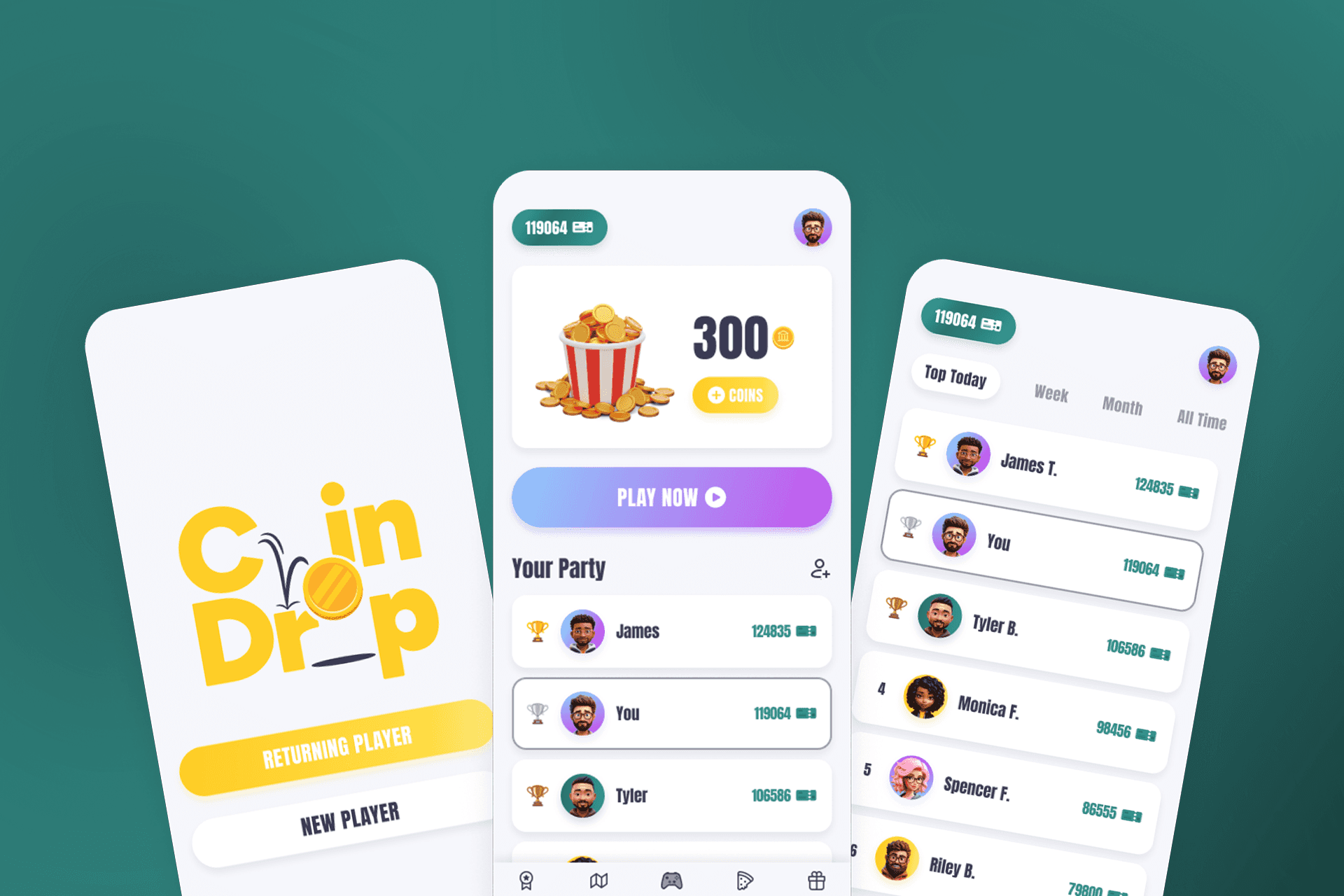
We engineered a comprehensive digital companion that modernizes the arcade ecosystem by streamlining the entire play-to-pay pipeline. By integrating a digital wallet for seamless game credits, group management tools, and a frictionless mobile ordering system, the application eliminates physical queues and captures lost revenue. The resulting mobile interface successfully consolidates complex backend venue systems into a simple, intuitive UI that enhances the physical sensory experience rather than competing with it.
The flagship mobile launch for The Coin Drop was entirely focused on closing the gap between a highly sensory physical environment and a frictionless digital workflow. Early research highlighted a stark operational reality: while 74% of arcade-goers visit in groups of three or more, the vast majority of venues lack the digital tools to accommodate group coordination. Furthermore, up to 40% of peak-hour revenue is lost simply because users refuse to abandon their games to stand in long food and beverage lines. To solve this, the project demanded a unified mobile architecture that could simultaneously handle reservations, digital credits, and on-demand dining without breaking the user's immersion.
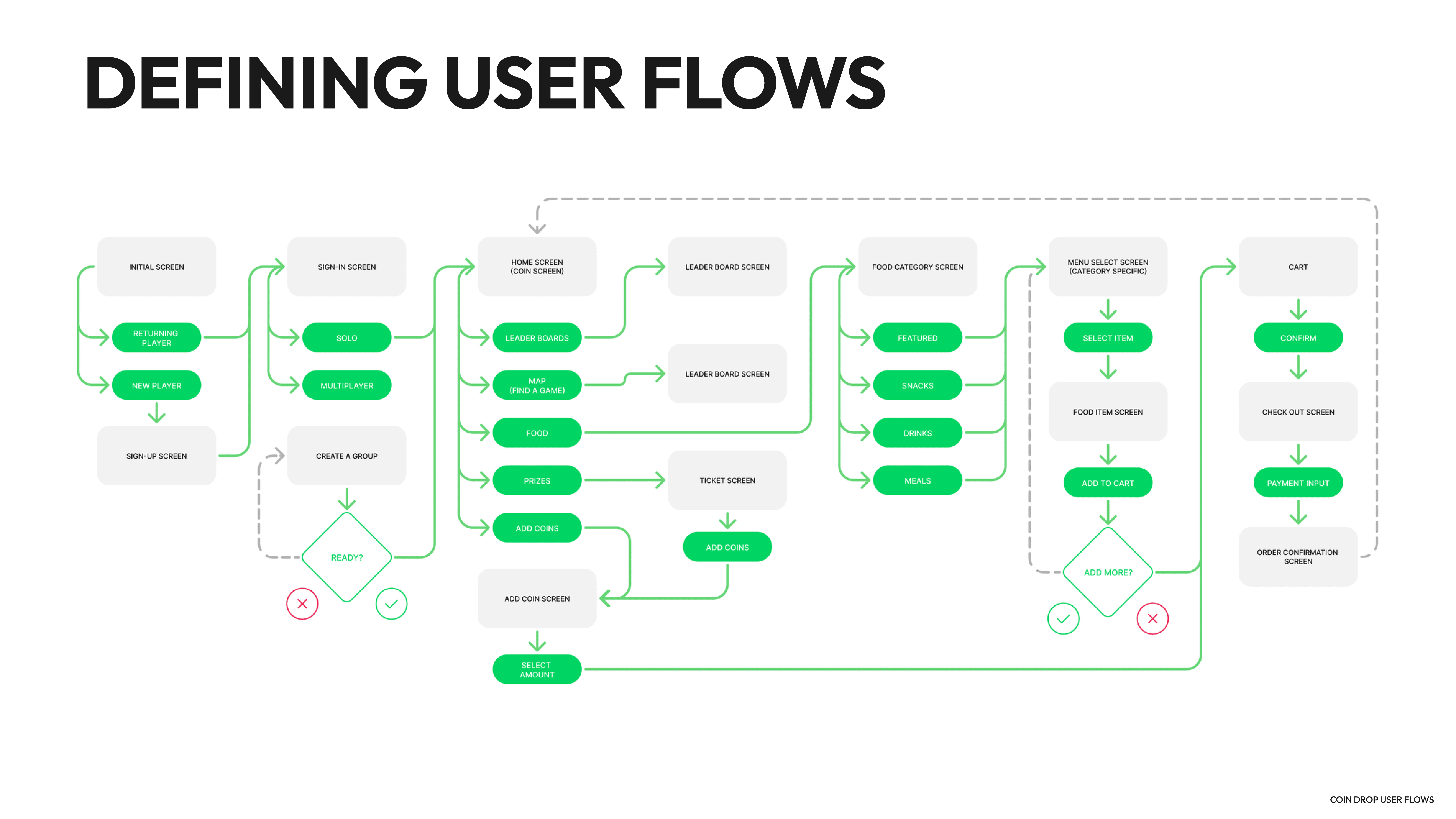
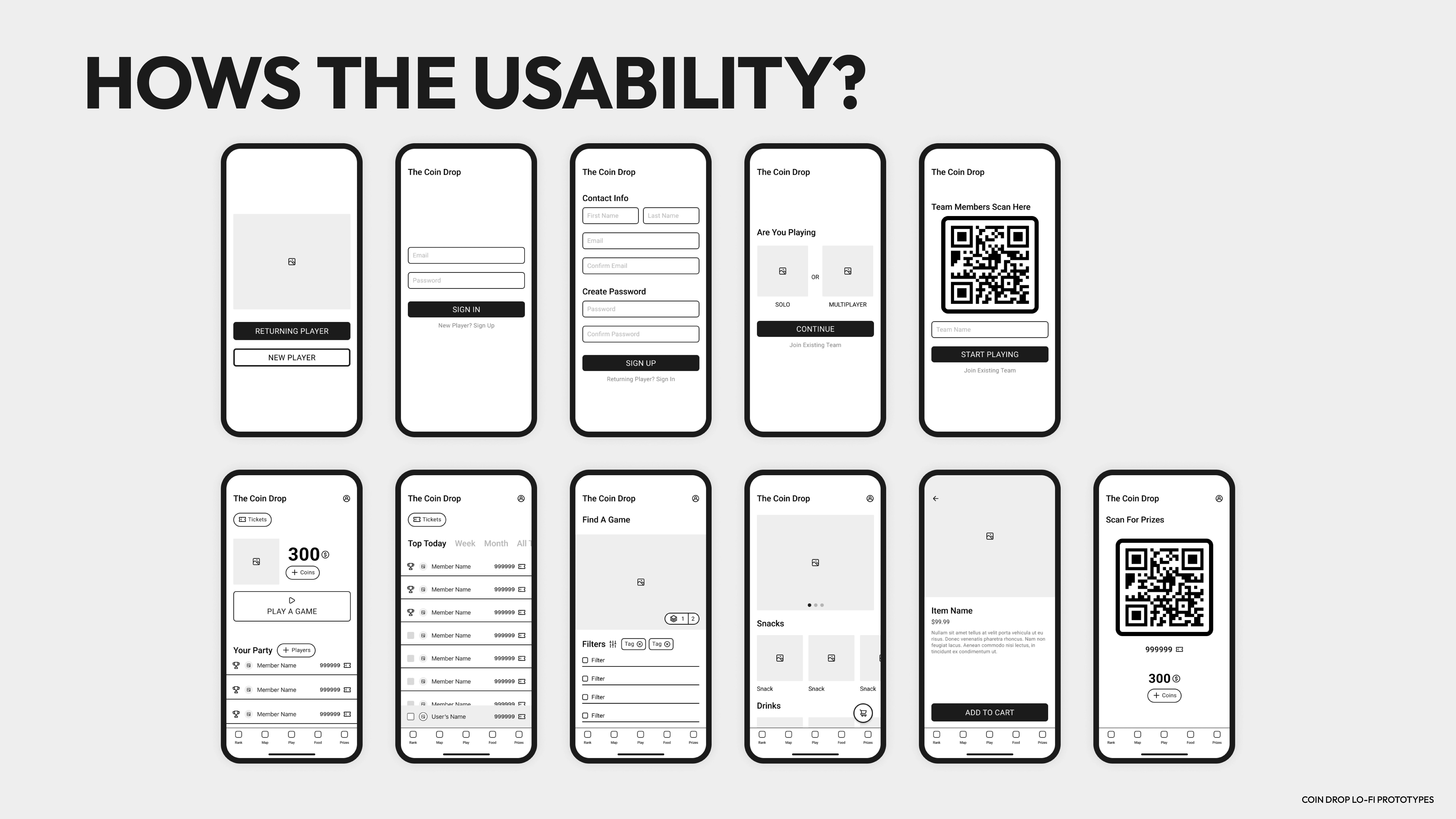
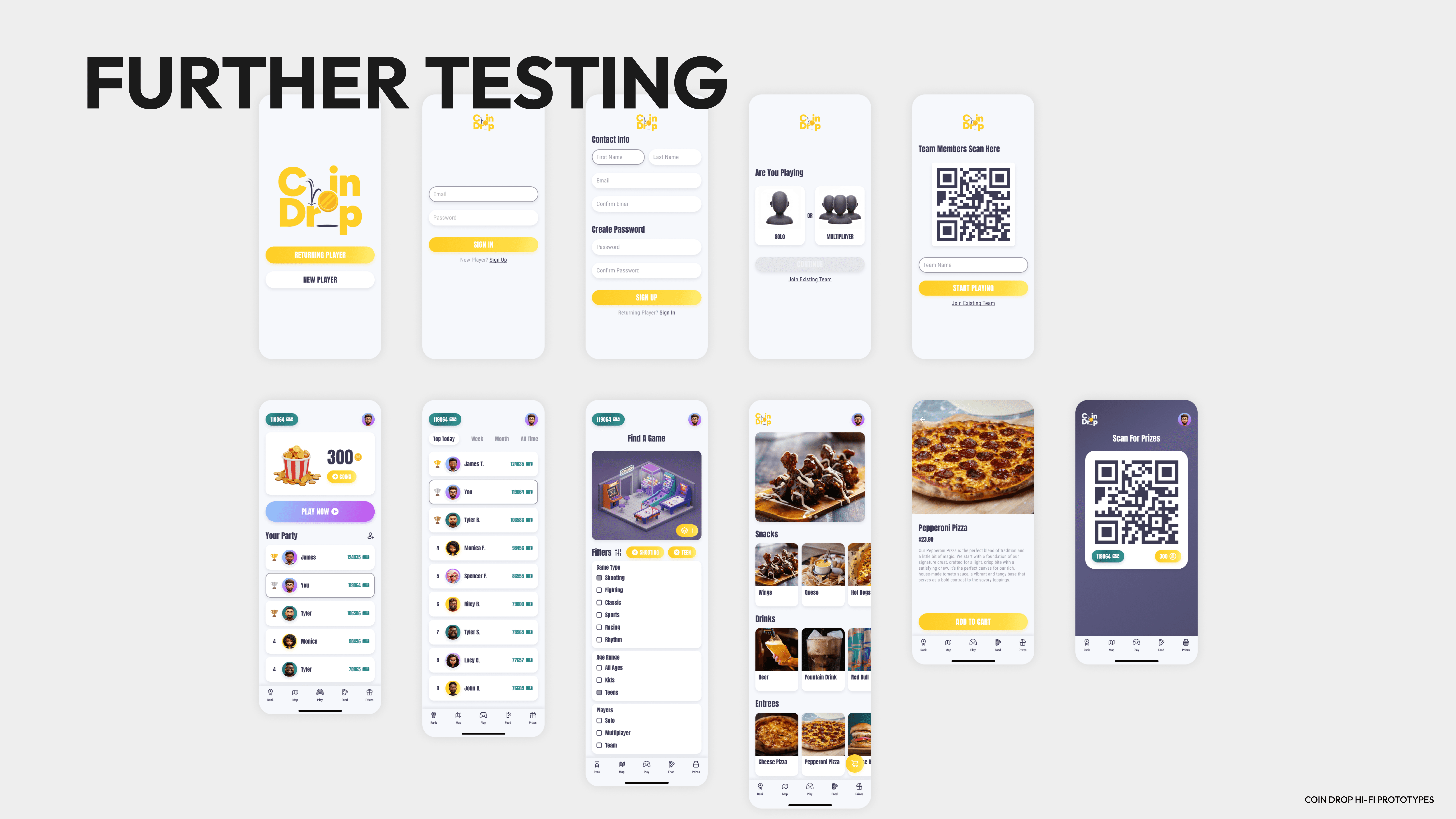
It isn't every day that you get to design an interface explicitly meant to be used by highly distracted users in a loud, fast-paced environment. This required developing entirely new interaction models that prioritized speed, high-contrast visibility, and clarity. We mapped out an interactive floor plan to reduce "search time" for high-traffic games. This feature drives a 25% increase in user engagement, and we paired it with a highly responsive mobile ordering system.
Ultimately, the complex backend systems governing point-of-sale, venue reservations, and digital wallets were abstracted into a seamless front-end UI. The final product successfully empowers groups to coordinate, reload credits, and order food effortlessly from their phones, keeping their attention exactly where it belongs: on the arcade floor.
constraints
Integrating a digital companion into a high-energy physical arcade environment required navigating significant hardware limitations and real-time data constraints. Our team managed multiple workstreams to bridge the gap between legacy cabinet hardware and modern mobile interface standards while maintaining system performance during peak-hour traffic.
Atmospheric UI: Designing for low-light environments required a high-contrast visual system that remained legible amidst flashing neon lights and physical distractions, ensuring the UI didn't "wash out" on standard mobile displays.
Hardware Compatibility: Engineering a frictionless QR-based token system that worked across varying cabinet generations, from 1980s vintage machines to modern 4K gaming stations, without requiring expensive hardware retrofits.
Real-Time Synchronicity: Managing the "Lag" in group play by ensuring party-sync logic updated instantly across multiple devices, preventing overlapping orders or duplicate token redemptions during high-traffic hours.
POS + Kitchen Integration: Bridging the gap between the mobile eCommerce interface and the existing kitchen POS system to ensure that in-app orders were fulfilled with the same priority as physical counter transactions.
pain points
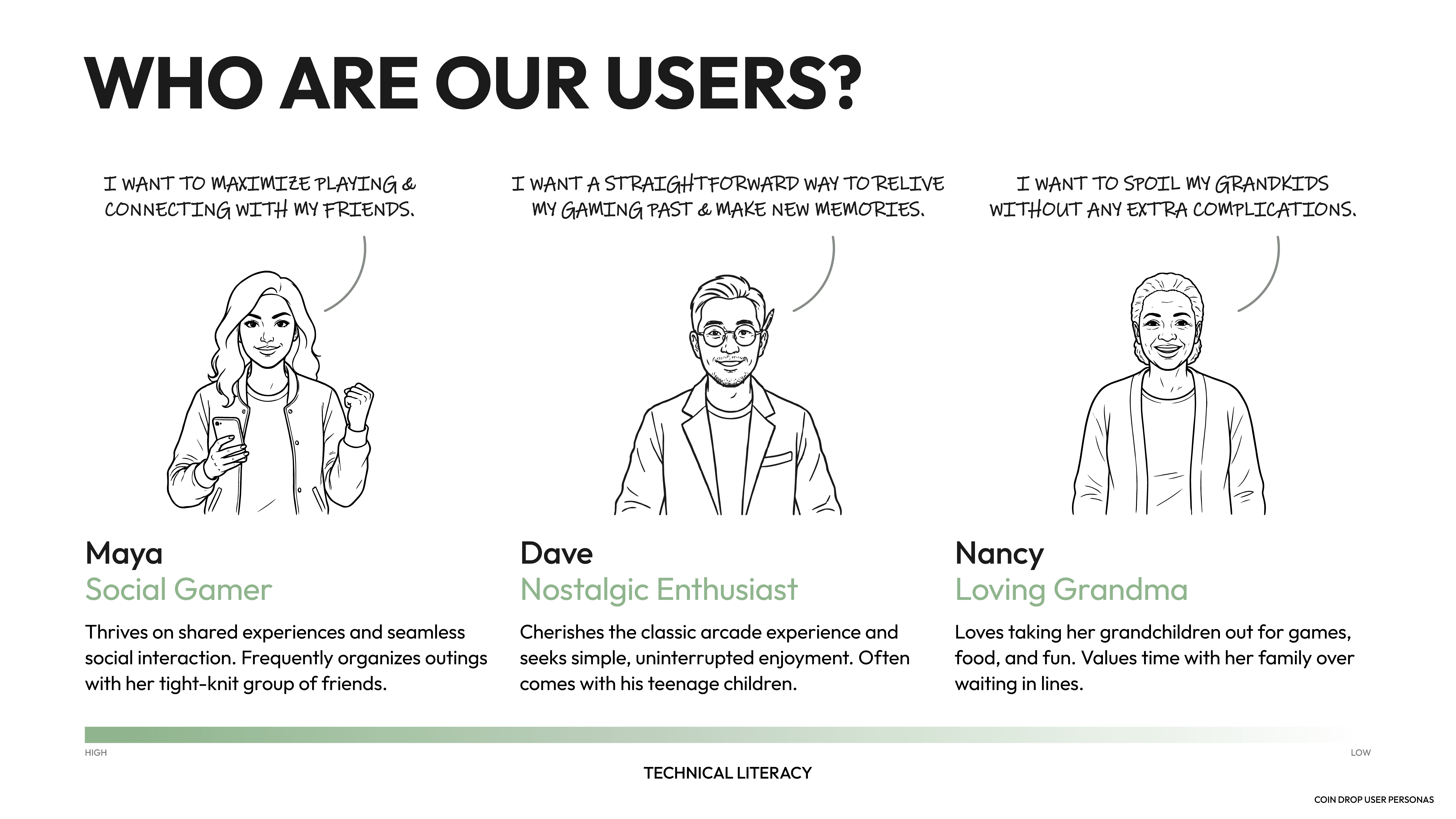
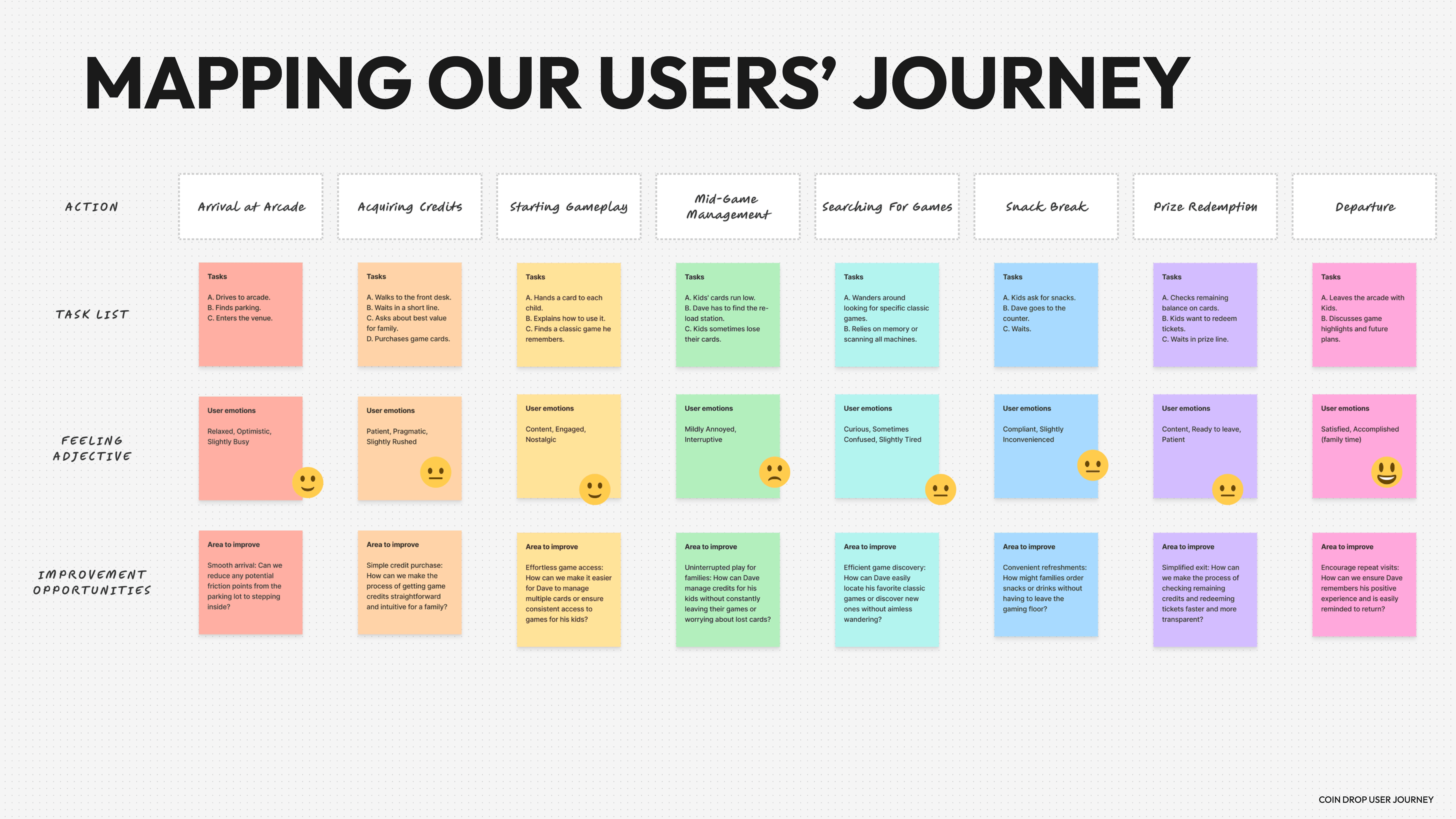
The discovery phase focused on "The Friction of Play" to identify the specific environmental and logistical barriers that interrupted the gaming experience for Nashville arcade-goers. Through immersive field observations and user interviews, we pinpointed three critical pain points that directly informed our product and feature strategy.
Booking Gap: User interviews revealed that 54% of participants found the manual party booking process "highly stressful," with groups losing an average of 15 minutes of "active play time" to logistics at the front desk.
Hunger Wall: Observational studies showed that 1 in 3 potential customers abandoned their intent to purchase food because the physical distance from the game floor created a "fear of loss" regarding their machine or spot in the venue.
Navigation Maze: Data from floor walkthroughs indicated that guests spent nearly 12% of their visit wandering the venue searching for specific titles, with 60% of users reporting frustration when a cabinet wasn't located within the first 3 minutes.
01
02
03
04
05
impact
The final mobile architecture serves as a sophisticated digital companion that successfully bridges the gap between the high-energy social atmosphere of the Nashville venue and the expectations of modern digital consumers. By eliminating major operational friction points, the interface allows the arcade to capture revenue that would otherwise be lost to physical bottlenecks.
Uninterrupted Venue Commerce: By introducing an in-app dining and beverage ordering module, the platform keeps users on the game floor. This directly combats the peak-hour revenue loss previously associated with long physical lines.
Frictionless Group Dynamics: The real-time party management feature allows users to seamlessly add or remove friends from their digital group. This encourages longer play sessions and simplifies group coordination in a loud, distracted environment.
Streamlined Play-to-Pay Ecosystem: The integrated digital wallet entirely replaces physical cards and tokens. This creates a highly efficient "Tap-to-Play" experience that accelerates game turnover and removes the hassle of physical currency.